At its core, we help organizations:
identify gaps in organizational AI readiness, workforce capability, and execution
build the practical skills leaders and employees need to adopt AI effectively
reduce implementation risk through improved training, alignment, and responsible-use practices
AI Readiness and Capability Building
Shelliza Mohammed Ali
Founder
Human Systems Architect
Shelliza Mohammed Ali is the Founder of Eight Aligned and a learning and capability leader with nearly 20 years of experience across telecommunications, financial services, healthcare, pharmacy, and community organizations.
She has designed and led enterprise learning, technology adoption, leadership development, and workforce capability programs for some of Canada’s largest organizations. Her work focuses on helping people understand new technologies, apply them in their roles, and build the skills and practices required for sustained adoption.
Across industries, she saw the same pattern: organizations invested in new systems, but employees were not always equipped to use them effectively. Gaps in training, leadership alignment, workflow clarity, and governance often limited the value of the investment.
Eight Aligned was created to address that gap.
The firm designs customized AI readiness and workforce upskilling programs that help organizations build practical fluency, identify productivity opportunities, strengthen responsible-use practices, and prepare employees to adopt AI effectively.
Engagements may include readiness assessments, applied workshops, role-based learning, leadership sessions, and capability measurement. Eight Aligned also works with experienced specialists where additional technical, governance, or specialized expertise is required.

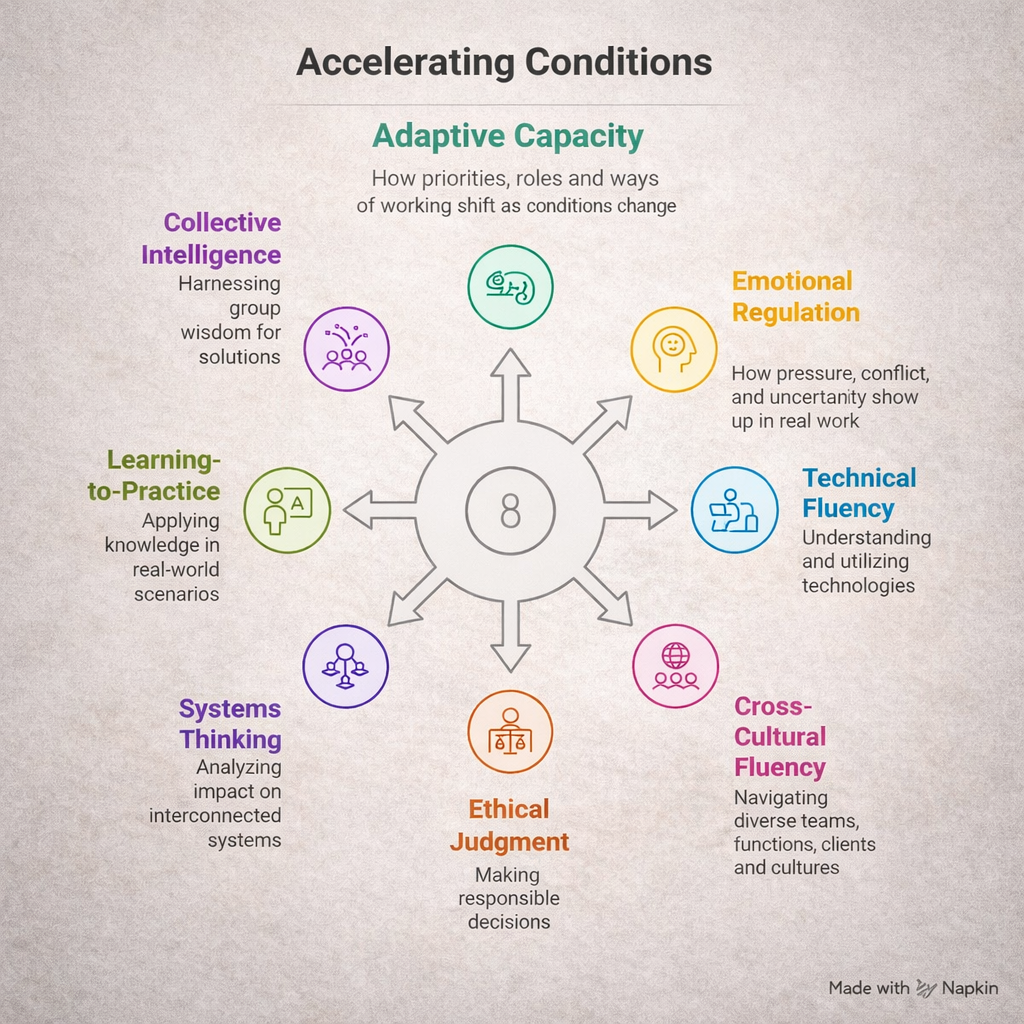
The Eight Executing Conditions for AI Operating Readiness
When these conditions are intentionally designed and reinforced, organizations strengthen execution, reduce AI implementation risk, and absorb complexity without performance degradation.
-
How well the organization adjusts priorities, roles, and ways of working as conditions change
-
How pressure, conflict, and uncertainty are handled
-
How people work with technology and AI in day-to-day execution beyond adoption
-
How meaning, expectations, and decisions translate across teams, functions, cultures, and clients
-
How responsibility and downstream impact are recognized as speed and complexity increase
-
How decisions and actions align across the organization and interconnected systems
-
How learning shows up in changed behavior and improved execution
-
How well the organization thinks, decides, and acts together.